
Did you know you typically only have a chance of getting pregnant 6-7 days during your menstrual cycle?
Pregnancy is possible if you have had intercourse around when you ovulate. Further down in this article, we’ll explain why.
This is based on an average 28-day menstrual cycle. Every woman’s body is unique and each menstrual cycle is different. Some women have irregular periods which causes ovulation to happen closer to or further from their periods.
Knowing your body can help you feel more empowered, in control, and gain a sense of love for your natural body. Here is what you need to know about each phase in your menstrual cycle, when you are most fertile, and how to detect signs of fertility.
What is the possibility of me getting pregnant?
The Menstrual Cycle
The menstrual cycle begins the first day of your period until the day before your next period. There are four main phases, and each phase is unique and important.
Menstrual phase
Week 1 (approximately 5 days)
*least likely to get pregnant*
This is the time when your body sheds your uterine lining. Your period happens because no fertilization has happened.
Pre-Ovulatory Phase
Week 2 (approximately 4-6 days)
*not likely to get pregnant*
This is the time when hormones are increasing, and the egg is beginning to grow.
Ovulatory Phase
Week 3 (approximately 5-7 days)
*fertile time – highest chance of pregnancy possible*
This is the time when ovulation happens. The egg is released and ready to be fertilized.
Luteal Phase
Week 4 (approximately 13-14 days)
*not likely to get pregnant*
This is the time when your body is preparing for the fertilization of new life. You have either already conceived during ovulation and are pregnant, or you are past the point of possible conception, and your next menstrual cycle will begin shortly.
Fertility signs
Estrogen is the key hormone for fertility. It also is what gives you the most obvious physical sign of fertility: cervical fluid.
Several recognizable changes happen to your body when you are most fertile:

Cervical Fluid: Cervical fluid will become clear, wet, and stretchy when you are most fertile. You will typically notice this change in cervical fluid 3-7 days before ovulation. This is a sign of a normal, healthy menstrual cycle.
Cervical fluid helps sperm stay alive in your body for up to five days, so it is ready to fertilize the egg on ovulation day. Once ovulation has occurred, within 24 hours your cervical fluid will typically lessen or dry up.
Cervical Change: When you are fertile, your cervix becomes higher, softer, and open. When you are infertile, your cervix sits lower, closed, and firm.
Body Temperature: Your body temperature will rise 0.5 to 1.0 degrees after ovulation. You can measure your basal body temperature (BBT) immediately in the morning before movement.
LH Hormonal Change: You can measure the surge in LH (luteinizing hormone) that occurs right around ovulation. You can do this by using test strips.
- Light spotting
- Slight cramping or pain on one side of the pelvis
- Breast tenderness
- Abdominal bloating
- Increased sex drive
Why can I typically only get pregnant during ovulation?
The reason you have the highest change of getting pregnant around ovulation is because conception is only possible when an egg is released and sperm has the potential to fertilize it. An egg can only live for 12-24 hours once it is released. Sperm, on the other hand, can survive up to 5 days in healthy cervical fluid that is produced around and during ovulation.
Cervical fluid is what helps sperm survive. During our infertile times, when no cervical fluid is present, sperm cannot survive more than a few hours. When there is no egg present to fertilize and not enough cervical fluid, sperm has nothing to fertilize and can only survive a few hours. Therefore, pregnancy is not possible.
What if I’m on birth control?
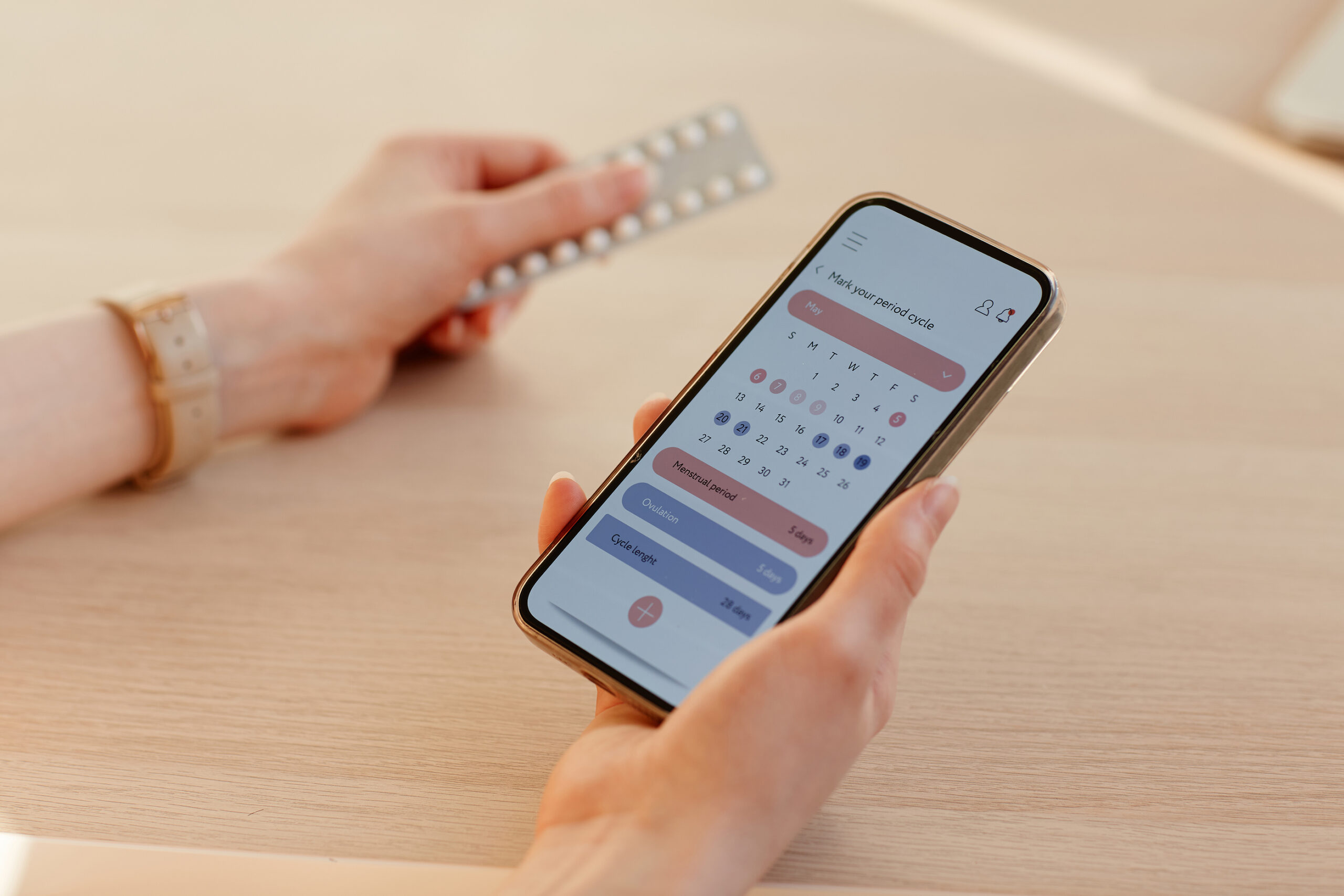
It’s important to know that if you are on some form of birth control you may not ovulate. Birth control alters your hormones to stop ovulation. Without ovulation, you can’t get pregnant.
You might now be wondering, “if I don’t ovulate on birth control, is my period real?” The answer is no. When on birth control, your period is not real, rather, it is a withdrawal bleed. It is a fake period that happens in response to a decrease of hormones.
Where can I learn more?
To keep track of when you are most fertile, you must be consistent in paying attention to what is happening to your body daily. An easy way to keep track of where you are in your menstrual cycle and if you are fertile is to pay close attention to what your body is telling you.
A great place to start tracking your menstrual cycle is with an app like FEMM where you can take notes on daily bodily changes, add symptoms, and compare month to month. To learn more about the four phases of your menstrual cycle, read more HERE or schedule an appointment with Lifespring today.
I think I might be pregnant…
If you think you are pregnant, our team of licensed medical professionals are here to help. We offer no cost pregnancy testing and consultations. Get the care you need today.